

Forecasters are tracking a strong El Niño building toward this winter, and Southern California slopes, swales, and drainage channels may see more water than they have in years. Whether or not the storm track delivers, the smart time to prepare is before the first heavy rain, not after the first washout.
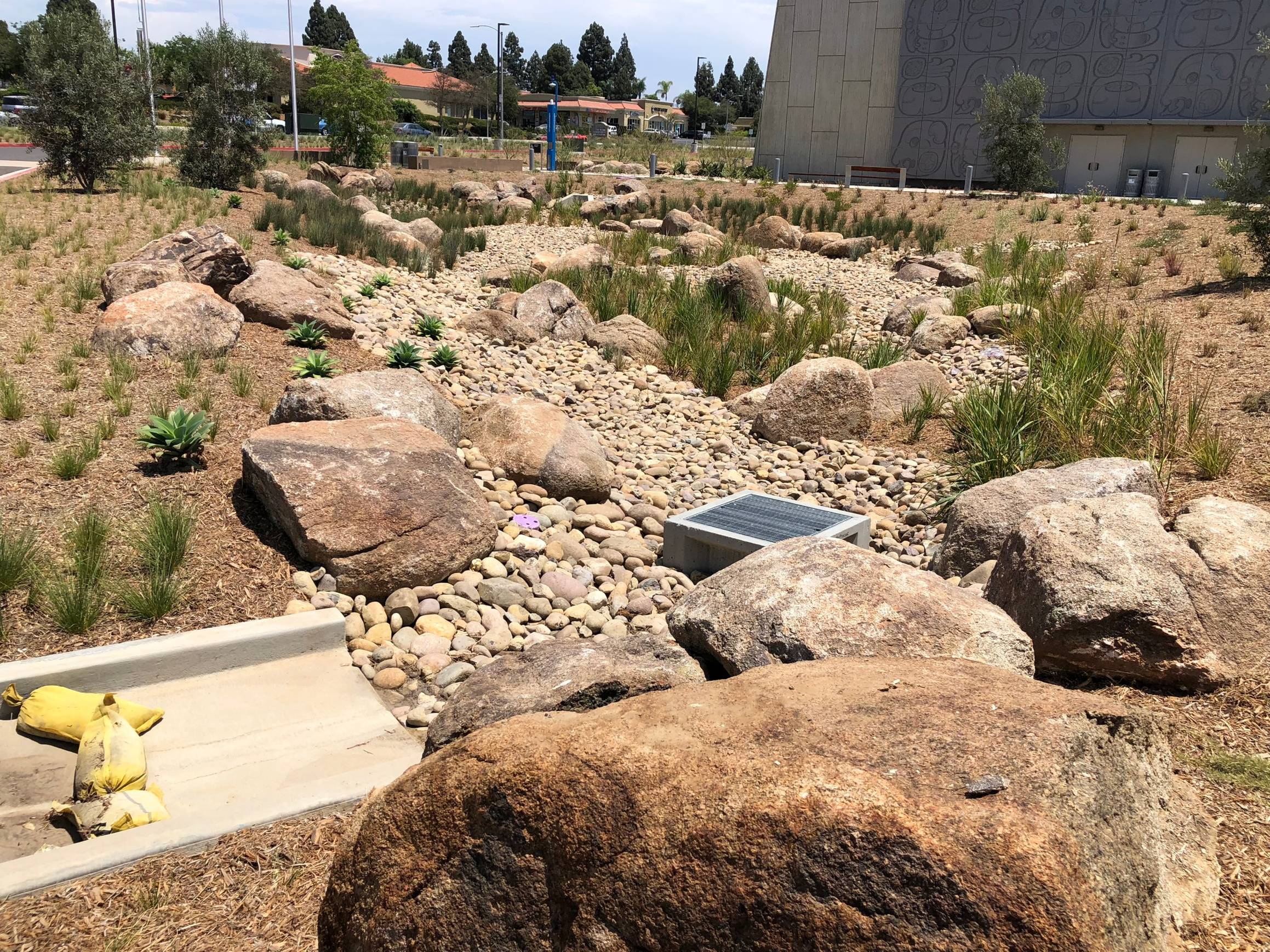
Large rubble and rip rap (stones between 6” and 18”) have a reputation as purely utilitarian, a pile of gray rock dumped where the water goes. It does not have to be that way. Done well, erosion control stone is one of the most durable and best looking elements in a landscape.
Why large stone works
Rip rap protects soil through mass and interlock. Heavy stone stays put when moving water would carry smaller gravel away, and the voids between the pieces slow the flow, break up its energy, and let water soak in rather than race off. There is no irrigation, no replanting, and minimal routine upkeep. For slopes, channels, and outfalls, that reliability is hard to beat.
Why angular stone outperforms round
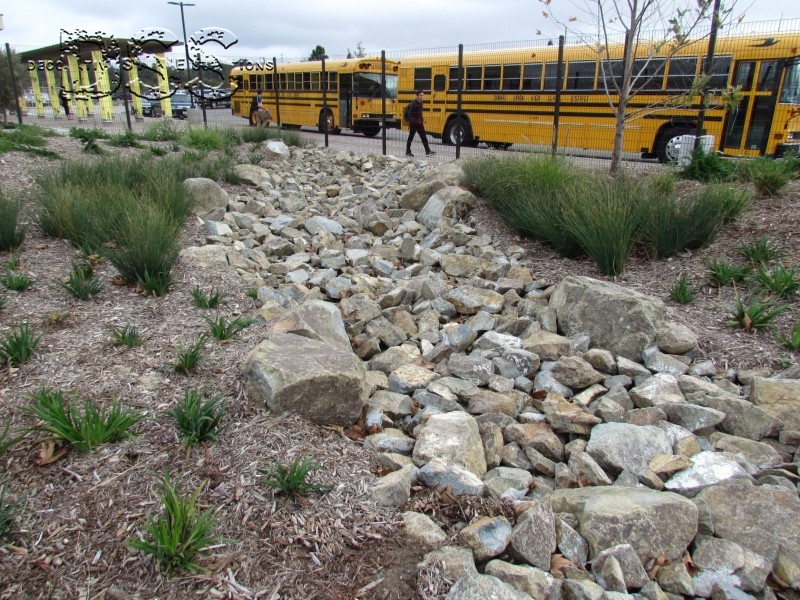
Shape matters as much as size. Quarried angular stone has fractured faces and sharp edges that nest into one another and lock together, so the stone layer behaves like one armored surface rather than a collection of loose pieces. That interlock creates friction between the stones, which keeps them in place on slopes and under fast moving water. Rounded stone has smooth surfaces that tend to roll and shift under the same conditions, and once a few pieces move, the rest of the layer can follow. Rounded rock still has a place in low-flow areas as a decorative transition or accent, but where water is doing real work, angular rubble and rip rap are the right choice. The fractured faces also give angular stone a natural, rugged look that suits dry creek beds and slope treatments.

Where it belongs
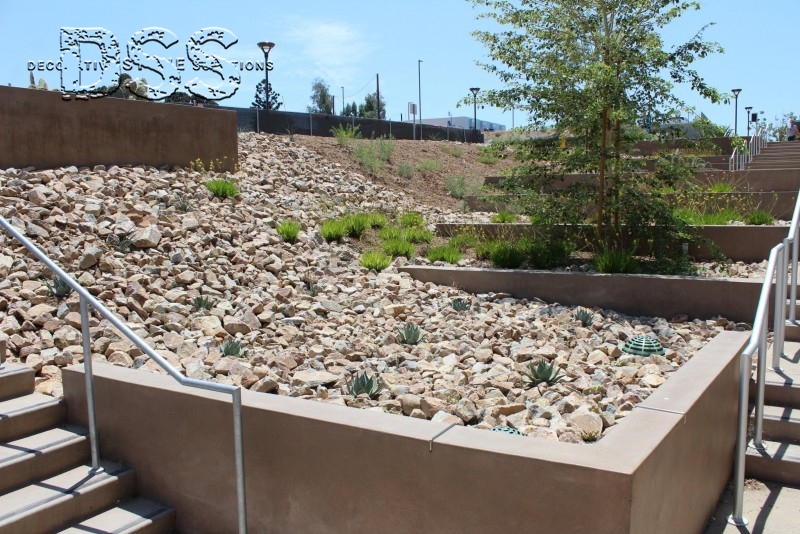
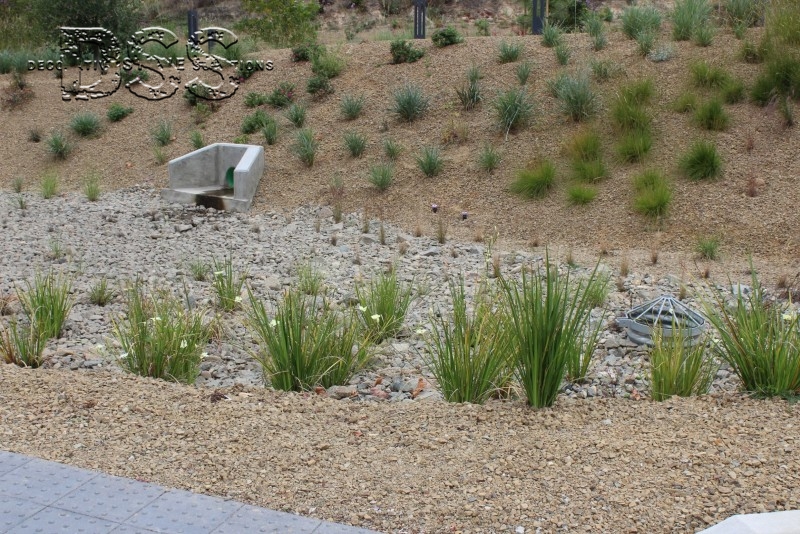
The most common applications are the toe and face of slopes and embankments, drainage swales and dry creek beds, culvert outlets and headwalls, downspout and outfall locations where concentrated water needs to be slowed, and basin edges. It also performs well along driveways and paths where runoff concentrates and tends to cut channels.
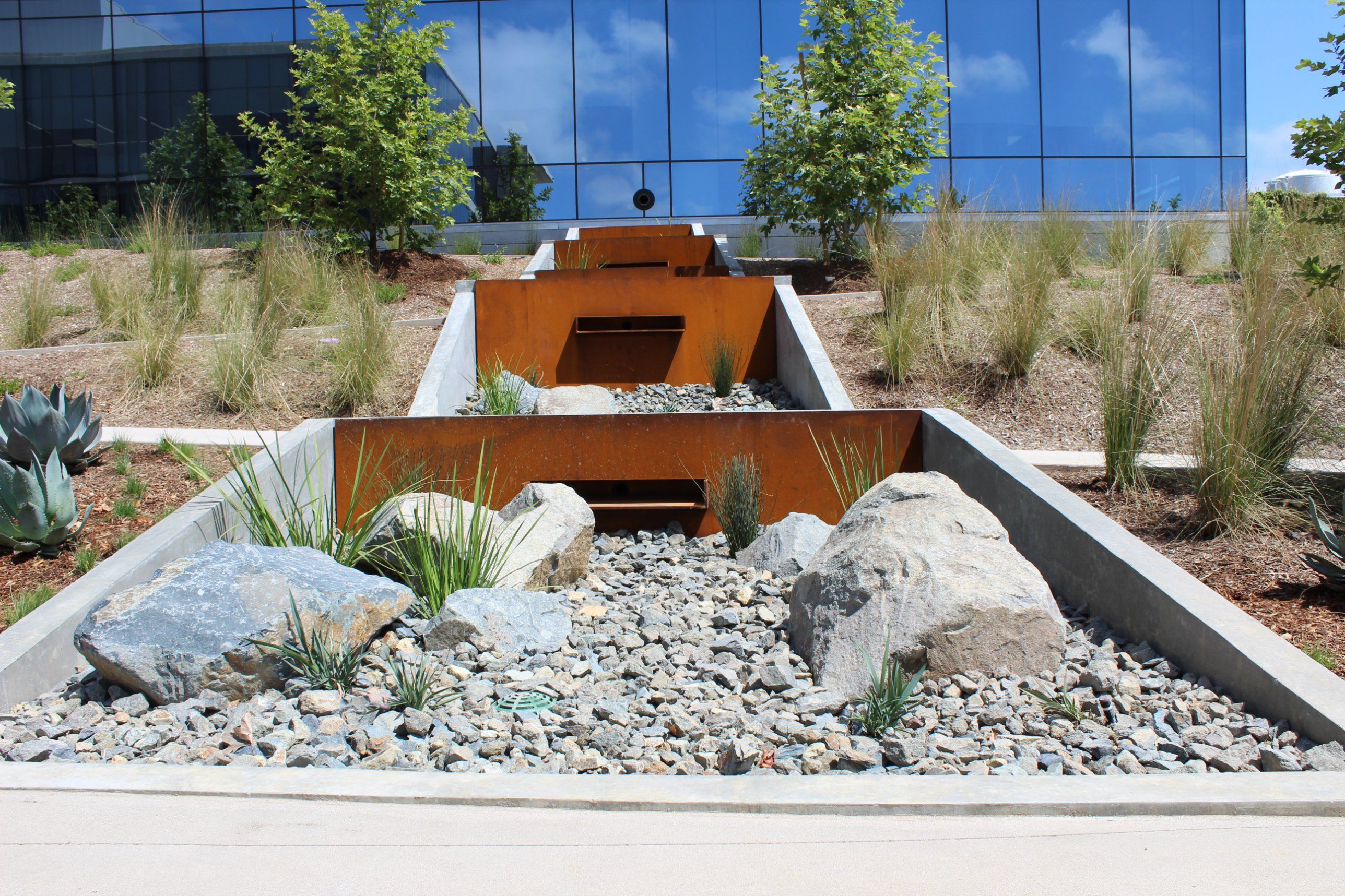
Making function look intentional
This is where design and performance meet. A few approaches we see work well on projects:
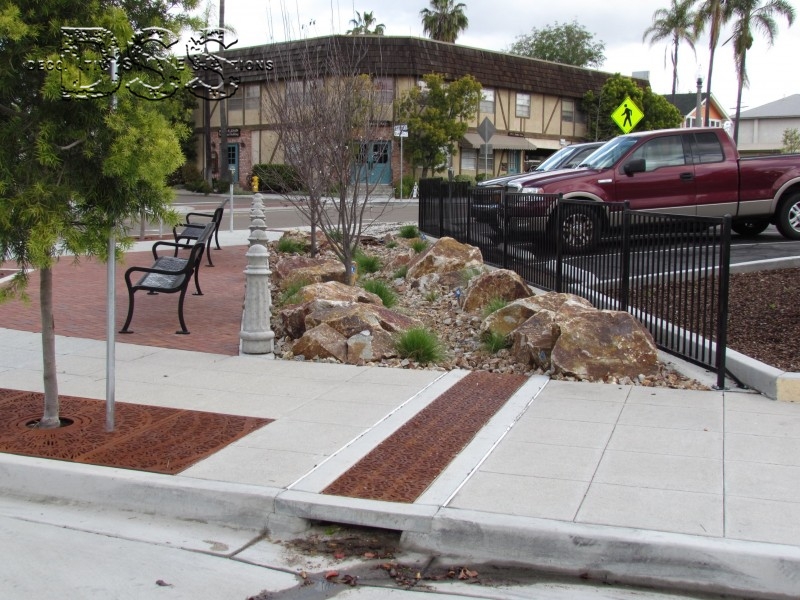
Match the palette. We offer a rich spectrum of stone shades ranging from earthy golds and deep reds to cool grays, making it easy to blend functional erosion control seamlessly into your existing landscape design.
Grade the stone with purpose. Use the largest pieces where flow is concentrated, then transition to smaller cobble or rounded accent rock in low-flow areas at the edges. The result looks like a natural drainage course and performs like an engineered one.
Shape the form. A gently meandering dry creek bed reads as a landscape feature instead of a ditch, and it carries water just as effectively as a straight channel.
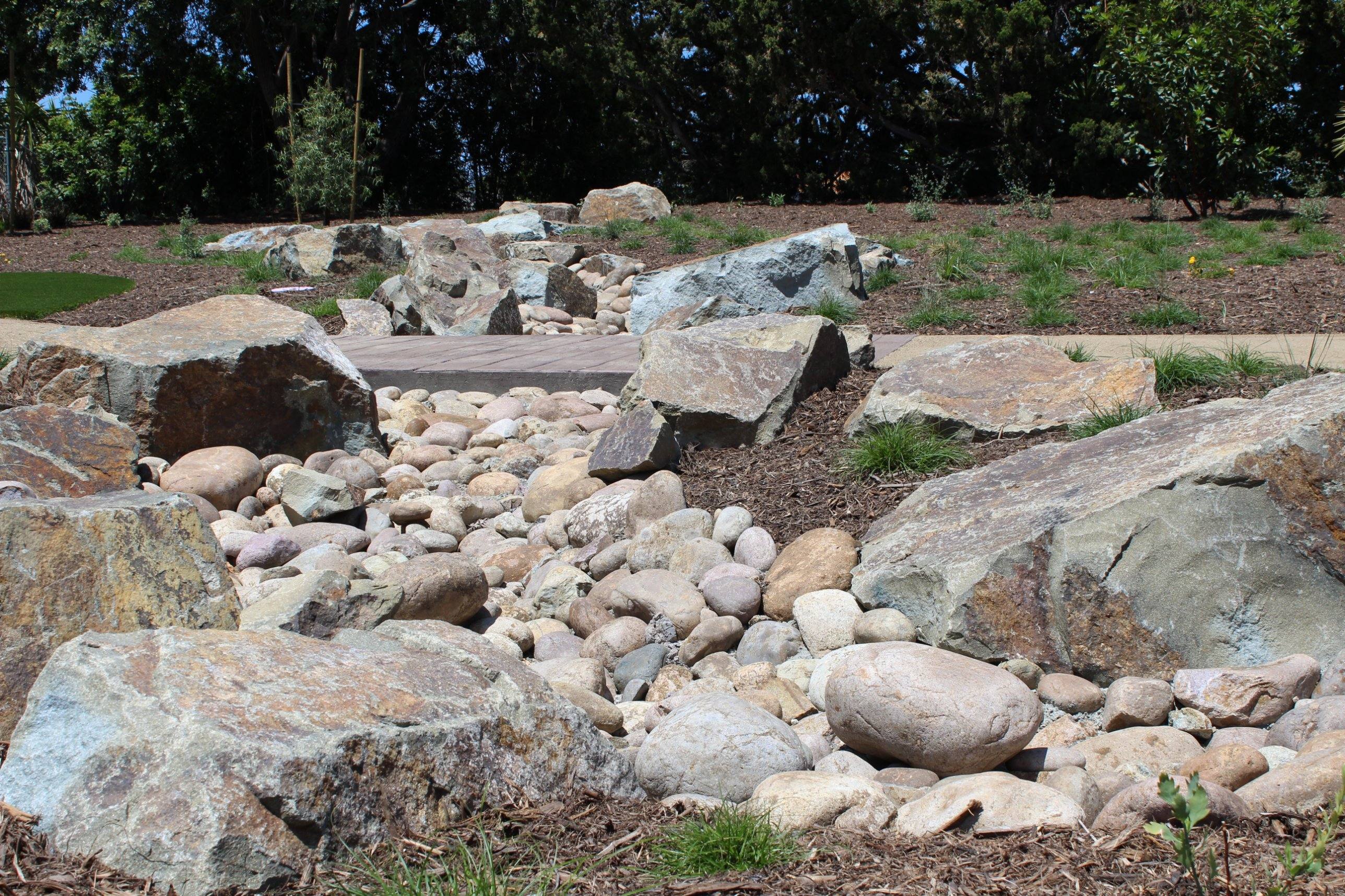
Plant the voids. Deep-rooted, drought-tolerant plants set into the joints add color and help hold soil, as long as they do not interfere with the design flow.
Add a focal point. A few well-placed accent boulders give the eye somewhere to land and anchor the composition.
Getting the performance right
Looks come second to function here. Stone size, gradation, thickness, and the underlayment beneath it should be set by your civil engineer or the local agency standards for the project. Filter fabric, proper keying in at the toe, and correct placement matter as much as the rock itself.
Placement and depth decide whether stone stays where you put it. On a slope, start at the bottom and work upward, much like laying shingles, so each course braces the one above it. Install erosion control stone deeper than you would decorative groundcover, seated into the grade rather than resting on top of it. If stone migrates downhill, the erosion problem returns.
Our role is to match your design intent to the right material within those requirements, including color and size consistency across the full project. Because we ship quarry direct and handle material once, a large project can be supplied from a consistent source rather than blended from several.
Where stone alone may not hold, such as steeper grades or concentrated channel flow, our stormwater management line, including Channel Grid and Slope Grid cellular confinement systems, is worth discussing alongside rip rap.
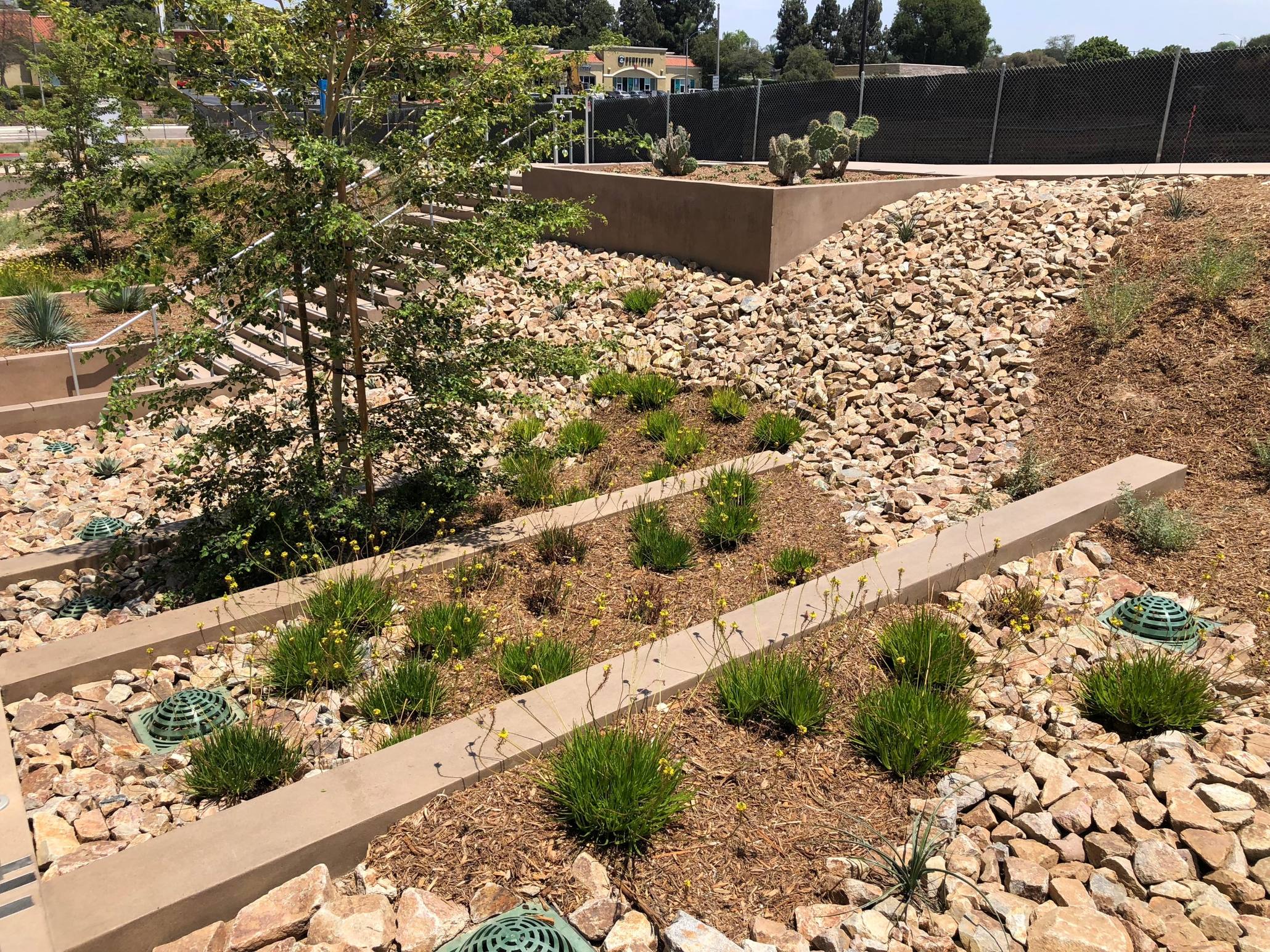
Keeping it working
Rip rap is low maintenance, not no maintenance. Over time, the voids between the stones collect sediment, leaves, trash, and other debris, and a clogged system cannot slow and carry water the way it was designed to. Inspect erosion control areas before the rainy season begins and again after major storms. Clear accumulated sediment and debris from the stone, channels, and outfalls so water keeps moving where you intended. While you are there, look for displaced or undermined stone, exposed fabric, and new erosion along the edges, and reset or replenish rock as needed. If you have planted the voids, keep growth trimmed so it does not block flow. A short, regular inspection routine is far less costly than repairing a failed slope or channel.
If you have a slope, channel, or outfall that needs attention before winter, now is the time to start the conversation.
Next step: browse our Rubble / Rip Rap collection on the Product Finder, use the Coverage Calculator to estimate quantities, or request a sample box to see color and texture in person. For project pricing and availability, contact our sales team at 800-699-1878 or estimating@decorativestonesolutions.com.